For many, augmented reality (AR) and virtual reality (VR) still mean video games and the entertainment industry. However, the real breakthrough of the technology is increasingly taking place in training, manufacturing and engineering design. Therefore, it is a priority development area in the Zsámbék Future Industry Science and Innovation Park.
What is the difference between AR and VR?
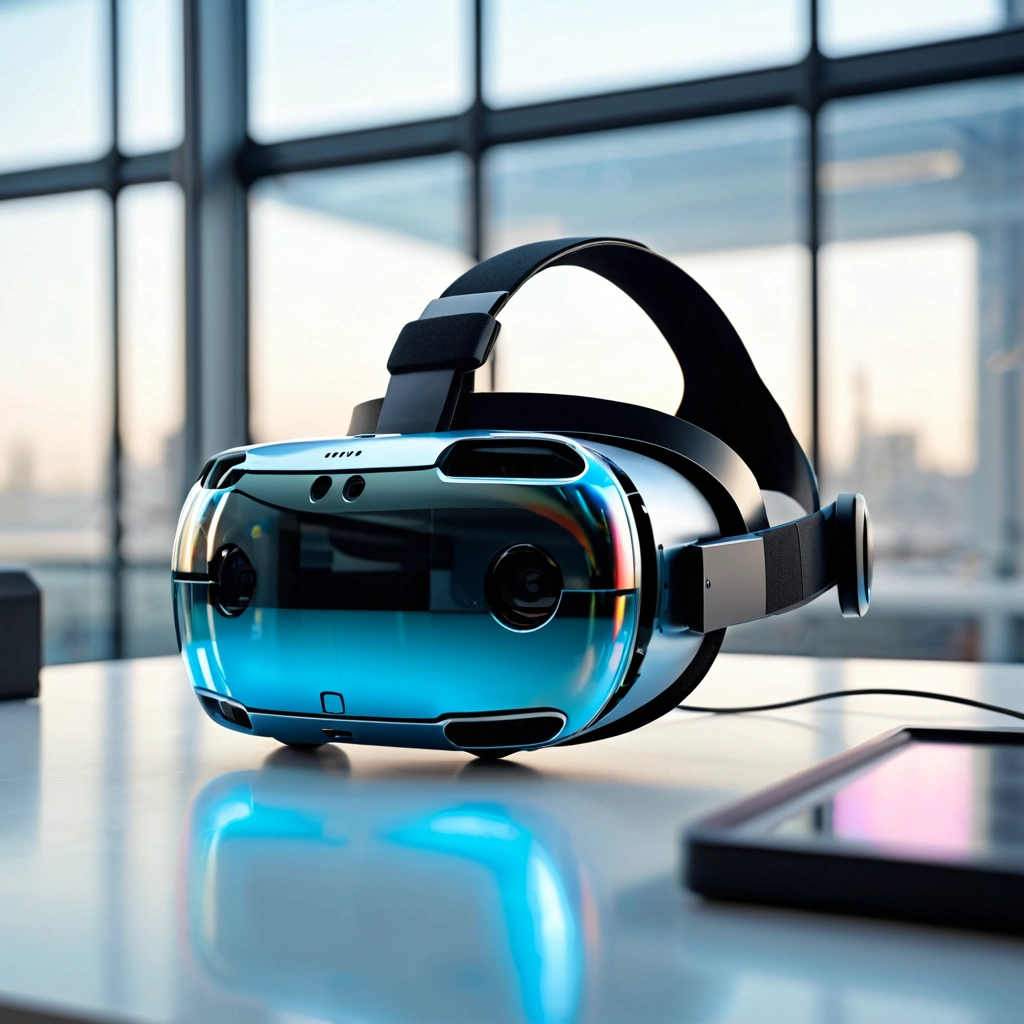
Virtual reality places the user in a completely artificial, digital environment: VR glasses isolate the user from the physical world and allow them to move around, manipulate objects, and perform tasks in a three-dimensional, interactive space. Augmented reality, on the other hand, projects digital information onto the real environment. For example, the display of a smartglasses or tablet can display maintenance steps, technical data for a component, or a three-dimensional model of a planned building next to a machine. The transition between the two solutions is often called mixed reality (MR).
Training without risk
One of the most common industrial applications is training. In a virtual environment, situations that are dangerous, expensive or difficult to reproduce in real life can be safely practiced: operating a dangerous machine, an emergency protocol, a surgical procedure or a complex assembly process. The practice can be repeated as often as desired, mistakes have no real consequences, and the system records exactly where and in what the participant needs to improve. This can result in shorter learning times and higher safety levels.
Help on the production line
In manufacturing and maintenance, augmented reality provides support directly at the work site. Assembly instructions can be displayed step-by-step on the workpiece, reducing the chance of errors and eliminating the need for paper-based documentation. With remote expert support, an engineer working at another site or even in another country can “see” what the on-site employee sees and can guide troubleshooting in real time. The technology is closely related to digital twins: virtual models become truly walkable and interpretable with AR and VR tools.
Design and visualization
In engineering and architectural design, VR allows a product, production hall or building to be viewed before it is physically completed. This helps to identify design flaws earlier and gives decision-makers and clients a much clearer picture than a two-dimensional drawing. This saves time and costs, and also facilitates collaboration between different disciplines.
AR/VR developments in Zsámbék
The Zsámbék Future Industry Science and Innovation Park prioritizes the development of augmented and virtual reality-based applications to support training, manufacturing and visualization among the technology sectors of the future. The area is well connected to the park's other focus areas: robotics, artificial intelligence, medical technology and 5G/6G networks, as high-bandwidth, low-latency networks and intelligent algorithms enable truly smooth, real-time AR/VR experiences.
The park aims to enable researchers, companies and startups to jointly develop and test new solutions, from concept to market launch.