The digital twin is one of the fastest-growing industrial technologies: a living, virtual replica of a real machine, process, or even an entire city. In this article, we explore how it works, where it's already being used today, and why it's key to research, development, and innovation.
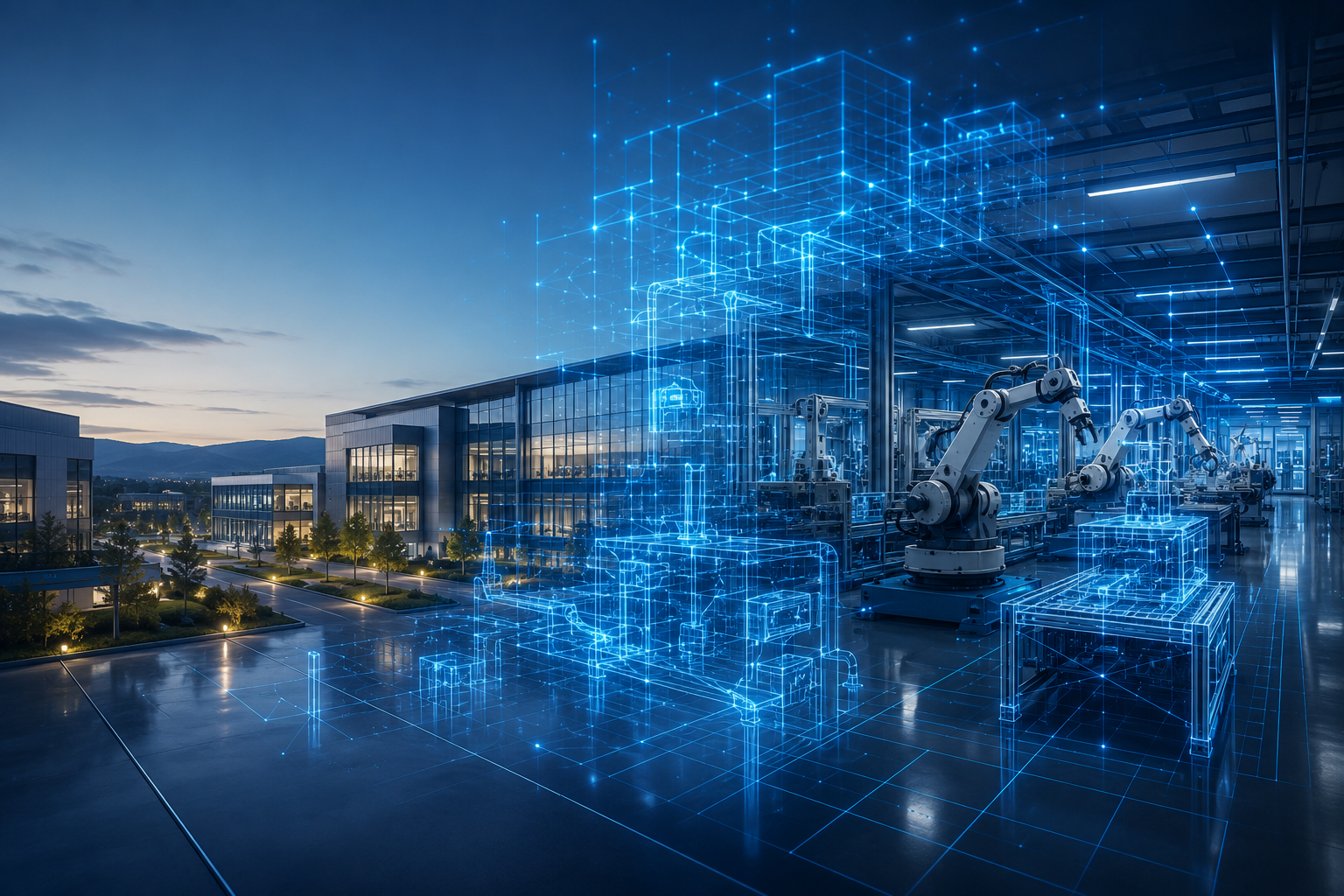
Imagine a factory, an aircraft engine, or an entire city district that has an exact, digital replica—one that tracks the original in real time and on which any changes can be tested in advance, without risk. This is the digital twin, one of the defining tools of the Fourth Industrial Revolution.
A digital twin is not a simple 3D model. It contains all the essential data, parameters and relationships of a real device or system and is constantly updated with data from sensors. This way, it not only displays reality, but can also simulate it: it predicts what will happen if conditions change. This enables predictive maintenance, reducing unplanned downtime and optimizing a process in virtual space before turning a single screw in reality.
The technology will move from labs to industrial everyday life by 2026. In Formula 1, new-generation cars are first created in a simulation environment, where aerodynamic and safety tests are carried out. In manufacturing, virtual commissioning can cut development time by up to half and bring similar energy savings. And major technology players are already modeling entire factories and supply chains with digital twins to validate new configurations within weeks.
The true power of the digital twin lies in the fact that it can be utilized in almost all advanced industries – precisely those that are the focus of the Zsámbék Future Industrial Park:
- Manufacturing and robotics: testing production lines, autonomous and collaborative systems before they are physically built.
- Smart city and 5G/6G: simulation of transport, energy and infrastructure networks in high-data traffic environments.
- Medical technology: Virtual validation of devices and diagnostic solutions in the early stages of development.
- AR/VR: Visual, interactive representation of the digital twin for training and planning.
- Sustainability: optimization of energy consumption and material requirements even before the investment.
However, the implementation of the technology is not self-evident: accurate data, cooperation between different systems, protection of the digital copy of critical infrastructure and prepared professionals are needed. These are precisely the conditions that a science and innovation park – with labs, test environments and multidisciplinary cooperation – can create. The digital twin is therefore a good example of how a research idea can be transformed into tangible industrial value.