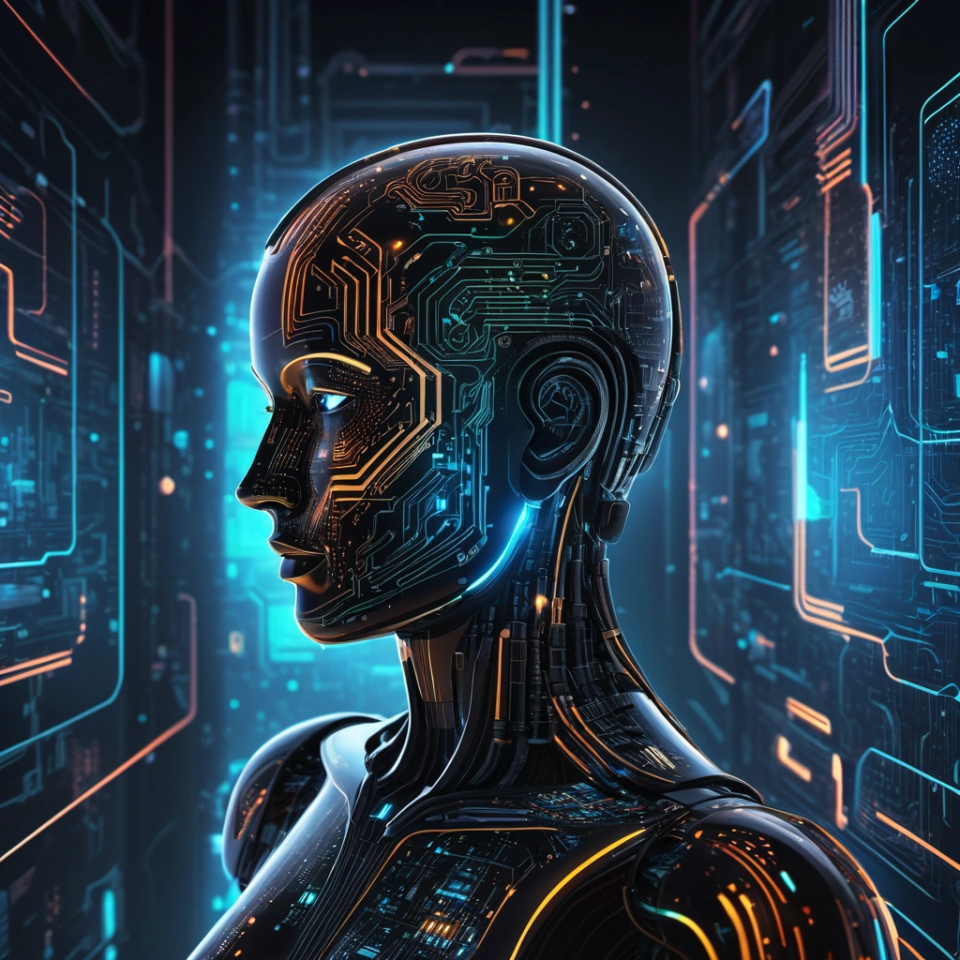
Artificial intelligence, or AI for short, has become an insidious part of our everyday lives. We use it when a navigation app plans a route, when social media recommends personalized content, when a smart device responds to our voice commands, or when a customer service chatbot answers our questions. While many still think of it as a futuristic technology, artificial intelligence is now a very real and active shaper of the economy, industry, and our daily lives.
THE Zsámbék Future Industry Science and Innovation Park It also aims to provide space for the development and testing of future technologies that will determine the functioning of society in the long term. Artificial intelligence will play a prominent role in this.
Where do we encounter artificial intelligence in everyday life?
One of the greatest strengths of AI lies in its ability to quickly recognize patterns, learn and support decisions from huge amounts of data. In healthcare, it helps with early detection of diseases, analysis of medical images and development of personalized treatments. In transportation, it is used for traffic optimization, accident prediction and development of self-driving vehicles. In industry, it provides the basis for automated manufacturing processes, quality control systems and predictive maintenance.
The most tangible examples for the general public are the world of smart devices. Smartphones, smart speakers, smart home systems are all built on artificial intelligence to make everyday life more convenient, faster, and personalized.
The possibilities of artificial intelligence
One of the biggest benefits of technology is increased efficiency. It can automate processes that previously required countless man-hours of work. This not only reduces costs, but also results in faster decision-making, more accurate forecasts, and higher quality services.
In the field of research and development, AI opens up new horizons. From pharmaceutical research to climate research to energy optimization, it helps to uncover connections that previously only became available after many years of work. Developments in this direction are closely aligned with the Zsámbék Future Industry Science and Innovation Park approach, which focuses on cooperation between science and industry.
The challenges and risks
However, rapid technological development also brings with it serious challenges. One of the most important issues is data protection and data security. Artificial intelligence systems require large amounts of data to operate, often including personal, sensitive information. Responsible management and protection of this data has become a key issue.
Ethical dilemmas are also increasingly arising. Who is responsible for a wrong decision made by AI? To what extent can algorithms be trusted to make decisions that affect human lives, for example in the fields of healthcare or transportation? The bias of algorithms and the use of distorted data sets also raise serious social questions.
The transformation of the labor market is also inevitable. Certain jobs will become automatable, while new professions requiring higher digital competence will emerge. This represents both a risk and an opportunity for society.
Artificial Intelligence and Cybersecurity
In cybersecurity, AI plays a dual role. On the defense side, it is effective in early detection of attacks, identification of suspicious behavior, and automated response. At the same time, attackers are also increasingly using AI-based methods, such as automated phishing, deepfake content, and sophisticated malware.
That is why artificial intelligence and cybersecurity are closely intertwined fields today. Zsámbék Future Industry Science and Innovation Park Its forward-looking approach also builds on these co-evolving technologies, where innovation and security go hand in hand.
The key to the future is conscious preparation
Artificial intelligence is not good or bad in itself. Its impact is determined by the purpose, framework, and responsibility with which it is used. In addition to appropriate legal, ethical, and security regulations, education and knowledge sharing are also key.
Innovation environments such as Zsámbék Future Industry Science and Innovation Park, create an opportunity for research, development, industry and education to come together in one place. This can provide the professional background on which an artificial intelligence-supported future can be safely built.
Artificial intelligence is one of the most defining technological drivers of our time. It offers enormous opportunities in healthcare, industry, transportation and everyday life, while also posing serious challenges in terms of data protection, ethics, cybersecurity and the labor market. The future depends on our ability to use this technology responsibly, consciously and in a forward-looking manner. In this perspective, the Zsámbék Future Industry Science and Innovation Park can play a key role.